


The complete evolution of vape mods is a detailed info article with hopes to deliver important knowledge about our modified devices that we have used in the past, as well as the present. Though having this knowledge won’t help you generate more clouds, it will, however, help you appreciate the vape mods that are available for us today. Those before you endured lacking quality, horrific designs and vape mods that simply couldn’t perform in today’s standards.
This article will give you an overview of the shapes, styles, and technology that these vape mods introduced. Though some of these vape mods aren’t the first to introduce the specific shape, style or technology, they were additives to the process. This article is meant to give you an overall timeline of how vape mods have evolved.
Before we begin, though, let’s get on the same page. We aren’t going back to the beginning of vaping – the days when a stick battery and cartomizer were the standard, we’re just looking at devices that are considered true mods. Most of us now hear vape mods and automatically think of expensive engineering houses designing, developing, and manufacturing the latest and greatest things. However, in truth, the term vape mod came from cig-a-like users sitting at their kitchen tables experimenting with different aspects of their vaping experience. They were modifying their cartomizers by drilling larger air holes, changing the wicking materials and searching for the next innovation, which gave birth to the modification generation. Without their drive for improving the system’s they were using, the industry we see today would be a totally different landscape.
The Birth Of The Tube Mod: The Screwdriver
In the days of cartomizers and stick batteries, the modders were constantly looking for longer battery life. We take it for granted now, but if you have ever used a cig-a-like you will know the pain of the 4-hour battery change. Rather than just adjusting the internal pieces of their existing equipment, a pair of modders known as Mrog and Trog: whose real names are Ted and Matt Rogers, a father-and-son team from Newark-on-Trent in England — turned a small pocket torch into the atomizer and battery array.  They took the next step and completely replaced the body of their e-cigs. As news spread about this giant leap forward, they realized that their device should be available to other vapers everywhere. Up to this point, everyone was using air pressure switches and devices that looked like cigarettes, the game was landscape was about to change.
The first commercial mod to enter the vaping market was the Screw Driver Mod, simply a modified flashlight body that had been adjusted to accept the connectors from the cartomizers. Rather than sucking on the device to kick-start the power, the screwdriver had a switch on the base, allowing the user to turn it on before they started to pull. Another great feature of the device was that it could hold much larger batteries, and when everyone was using cartomizers, bigger batteries meant much longer vaping times.
Nick “Grimm” Green is on record as saying that when he first used the screwdriver vape mod he got a solid 27 hours on a single charge, which at the time was unheard of. The fact that the user could change out the batteries in the unit was also a plus, unlike its predecessors, a dead battery did not mean the expense of a new device. Although it used 16340 cells, this device put the vape mod’s on track to becoming the beasts we know and love today. Interchangeable battery, button at the base with a fitting at the top to change the atomizer, these boys came up with the tube mod.
The Birth Of The Box Mod: The Gizmo
 While the Screwdriver gave many early vaper’s a step forward on their journey, it gave others pause for thought. They looked at the device and thought maybe it wasn’t for them. The concept was solid, more battery life and the ability to use the newer styles of tanks that were appearing on the market, but in some people didn’t want long tubes sticking out in front of their faces.
During the course of the next few months, ideas were hatched to give the devices a larger footprint, rather than using a tube they came up with the idea of fabricating boxes designed specifically for vaping. When you look at your hand now, the majority of the time you are holding a box mod, but when this happened the concept was earth shattering.
As the market continued to evolve, the Gizmo was released. Even though we can call this the first box mod, by our standards it wasn’t what we would now class as a box. A single battery, mechanical switch and a tank that was fitted inside the box, the Gizmo was truly a vape mod that was light years ahead of its time. Crafted from machined anodized aluminum, one side held a single battery and the base plate transferred power across to the tank. While this design was ahead of its time and the market would take several years to come back around to this way of thinking, the Gizmo’s concept was solid.
No longer did it resemble the cigarette’s that electronic devices were invented to replace, this was a new and exciting branch in the tree of modding. It produced the power of the tube mod while keeping the device no bigger than a pack of cigarette’s, perfectly designed for slipping into a person’s pocket and not drawing the attention of bemused onlookers. The device itself was actually tiny, taking advantage of an 18500 battery compartment and space big enough for a 23mm tank. The contacts were brass to minimize voltage drop, it seemed that the developers had considered everything. The concept of the box mod was here to stay, and, even though mechanical tubes were being produced everywhere, their time in the spotlight would be short-lived. It would take the innovational step, needing more vapor production, to move this design to the side but for the time being, those who wanted tube or box were happy.
The Birth of Variable Voltage: The Joker AV (Adjustable Voltage) Mod

Moving forward from raw mechanical power was an inevitability. A single battery by itself was no longer providing the vape that some people were looking for. When modders started adding more batteries in series into the mix, the coils got too hot and we all know the pain of dry hits. The solution was as simple as turning on a light bulb, well actually turning down the lights for a nice romantic evening. Using the same principles as a dimmer switch, variable voltage vape mods were born. Similar in looks to tube mods, the Joker had secrets that only the user knew about.
For the fans of the tube style vape mod, the Joker AV played right into their hands. Slim lined and sleek, the device was aesthetically pleasing, with the casing being made of colored metal, there was no chance of scratching off the paint. Firing from 3.6 to 6 volts, equipped with short-circuit, reverse polarity and thermal shutdown protection, the Joker AV (adjustable voltage) was a force to be reckoned with. Adjusting the device was as simple as turning the small screw head attached to the variable resistor that was built-in, the Joker AV vape mod came with a voltage meter so the vaper could see exactly where they were at before putting their atomizer anywhere near it. Another feature that was built into this vape mod was the battery monitor. As the power dropped in the batteries, the light on the side would change from green to blue to tell you it was getting close to changing time.
A simple change in design, adding a potentiometer and circuit board moved the industry forward, vaper’s were no longer being held back by the solid unwavering constraints of Ohm’s law, they now had the ability to vary the amount of electricity they were using to power their coils. Just because they had batteries that were capable of delivering 6 volts didn’t mean they had to use it. If we were talking archeological digging, we have just seen the industry move from the stone to the bronze age. The Joker AV mod could use 801 or 510 atomizer connections, one of which has now become the industry standard.
The Joker AV mod certainly had its limitations. The idea of playing a guessing game to get to your vaping sweet spot can be time-consuming and unless you are an experienced vaper, trial and error could be costly in both patience and cartomizer coils. Unless you attached the volt meter to the device, it really was a gamble as to where you were, but some people live to fly by the seat of their pants.
We could now adjust the amount of power being delivered to the coil but there were modders still determined to take this new technology to the next level, bringing us closer day by day to the technology we rely on today.
The Birth Of Variable Wattage: The Darwin Mod
While some modders were concentrating on turning the screw, adjusting the voltage and finding the sweet spot for the tanks and cartomizers that were available, some were looking to make the transition to full digital capabilities. Rather than taking pot luck with the voltage until you found the sweet spot, the focus shifted to finding a wattage level you liked and having the vape mod make calculations between the battery and the coils.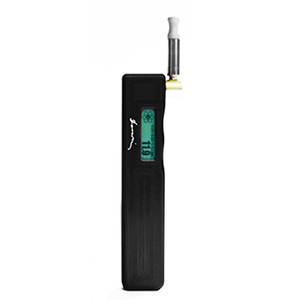 When the Darwin mod from Evolv came into existence, it knocked many people for a loop. It looked like nothing that had been seen before and honestly there has been very little since that comes close to its appearance. With a side mounted 510-connector that doubled as an on-off switch, this was a beast that had its own “look and feel”. Looking like a cross between a wi-fi adaptor and a mp3 player, this little demon was a force to be reckoned with. In its own way, it was a thing of beauty. When you get past the connection arm/ on-off switch, the Darwin was a slim line sleek addition to the vape-box family. The backlit LCD display gave users the ability to see the resistance of their coils while using the scroll wheel to adjust the wattage. The device took note of your wattage and adjusted the voltage accordingly, it was capable of firing between 4.2 and 12.7 watts, with the majority of users finding their happy place in the mid range of its capabilities.
To put it bluntly, this was the first commercially available set it and forget it vape mod. As soon as you set the wattage, it stayed put, even if you changed the atomizer that was attached to it. There was no need for complicated calculations in your head to find the optimum vaping range, you started off at a low-wattage setting and increased it by turning the wheel until you hit that sweet spot. There was no need for taking the atomizer off to check the voltage, the screen read out the wattage, voltage and even told you when the batteries were getting low. There was no need to buy additional batteries as the Darwin had its own built-in 1800 MAh (milliamp hour) power source, with micro USB charging that claimed pass through abilities.
Its biggest limitation was outside of its own control. As modders began bringing new and improved tanks into the marketplace, that side mounted on-off switch turned out to be its downfall. As the tanks got wider, the connector could not be folded down and the sleek, streamlined device could no longer be safely stowed in many people’s pockets.
While this technology may seem alien to our current vaping standard, if you look in your hand right now, most of the technology used in your vape mod stemmed from these innovations. The Darwin was greatly useful as most vaper’s were hitting around 2-2.5 ohms. This was before the Sub Ohm craze hit the market, so low-wattage devices were all that were needed.
The Birth of The Bottom Feeder: The Reo Mod
While some modders were focusing all of their attention to finding new, innovative ways to harness the power that their devices could deliver, others were focusing on an entirely different part of the problem. Dripping can be a messy and time-consuming business. The act of taking off your cap, taking out a bottle, unscrewing it, dripping it onto your coils and potentially spilling some, causing you to have to then take the time to clean it up seems laborious. While others were looking at batteries, some were looking at new and improved ways to deliver e-liquid directly to the deck. Some in the community may look down on the Squonker’s as the crazy cousins who threw together some wild-looking designs but without them, many of the Sub Ohm beast tanks that we use today probably wouldn’t exist. In 2009, Carlos Juice Box or CJB caught the attention of the vaping world with a couple of great innovations, but due to its limitations was rapidly improved upon by other companies. The idea of feeding the coils from the bottom was sound, but the overall presentation and functionality left a lot to be desired. After many tweaks and twists, the “Reo” bottom fed vape mod was born.
The concept was solid, the box contained space for a power source and a 6 ml e-liquid bottle. The earliest model was made from oak, which was prone to cracking and shrinking and had a spring-loaded button on the side to push on the bottle and force e-liquid through a tube and specially designed connector up to a cartomizer or RDA that had been made for bottom feeding. A simple concept that took off to the point where no one could order the boxes as they were always out of stock.
Innovation is the name of the game in this industry and the device rapidly evolved into a fully mechanical – meaning no wires or circuitry- all metal vape mod. By turning the outside of the box into the negative contact and running a metal strip under the switch to make contact with the positive, the same concept as the tube mod was achievable. The button for pushing e-liquid up the tube was simplified when they realized that cutting a hole in the door was simpler and less costly.
The Reo was so popular and successful that many vapers bought more than one and swear by the design to this day. The Reo Grand is still a popular design amongst the squonker’s, and if you haven’t tried one you are missing out on a valuable part of the vaping experience. Without the invention of the bottom fed system, there would have been no progression to carto-tanks or the gravity-fed tanks that we use now.
The Birth Of The All In One Vaping System: The Billet Box
The concept of the All in One or combination vape mod had been around since the beginning of the building adventures began, but it took the ingenuity and innovations of many avenues in vaping before it became a reality. We wanted a low profile box mod, meaning that the only thing visible from the outside was a drip tip, it needed variable voltage and must carry a decent amount of e-liquid on board. The Billet Box filled all of these requirements and then some, condensing the vaping experience to a simple inconspicuous box.

The Billet box name was derived from the fact that it was CNC-machined from a solid billet of 6061 t6 aluminum. Painstaking attention to detail kept the Billet Box in research, development and testing for a year, but when it was released, one man’s dream became everyone’s reality. Looking for the indestructible mod was not a new idea, people who work in dirty or dangerous areas can attest that a mod falling off a table can be a pain in the backside as can changing the batteries throughout the day or having to fill your coils with e-liquid when your hands are caked in mud or sawdust. The Billet Box had taken all of those things into consideration.
The dual battery set-up gave users the ability to vape at a high or low voltage and customize their vaping experience using the onboard potentiometer. Amazing battery life combined with the 6.5ml internal cartomizer tank could keep the door closed for hours. Even when it came to refilling the tank, the user only had to remove the door and inject e-liquid through the spring-loaded nitrile ball valve at the top of the tank. Changing the cartomizer out was a little bit trickier, but this device did not require the cartomizer to be screwed into a connector as it sat in place and was held down by a brass fitting at the top of the box.
Designed with stealth in mind, the airflow control was as simple as 3 holes drilled into the side of the box, the user could cover them up to secretly vape where they weren’t supposed to, and the look of the Billet really didn’t give away its true purpose to the uninformed. Speaking of appearance, the body of the box was sleek, the Aluminum was highly polished and inlaid with carbon fiber plates, just to give it the perfect finishing touch. When you opened the face plate, the Billet gave the look and feel of an old school guitar amp, the name emblazoned into the plate that held the potentiometer and the tank looking like a valve from ancient technology.
The only downside to this vape mod was the fact that you could only use 2 3.7 volt 16340 batteries, due to the constraints of this precision box. The design was so specific that you could not change to larger batteries even if you had wanted to.
If these designs were never brought to the market, we would be living in a very different vaping world right now. We sit and wonder what the next innovation in the industry will be, but in reality, we have already seen such amazing leaps in technology that it is hard to imagine which direction the market will head in next. If it weren’t for these designs, we would never have discovered high-powered vaping. We have brought forward temperature control, using different types of wire to get the effects we are looking for. My only hope is that somewhere, a modder is tinkering in their garage working on the next big thing.
As always, enjoy your vaporizer and vape safe!


